Your Quran Reading Plan For Ramadan
As the beloved month of Ramadan approaches and we begin preparing our hearts and homes, let this be a gentle reminder to slow down, set our intentions, and thoughtfully plan our goals for this month of mercy.
Ramadan is the month in which the Holy Qur’an was revealed. It is a time to reconnect with the words of our beloved Rabb - to learn, to recite, and to reflect deeply. Even a few sincere moments with the Qur’an each day can transform the entire month.
One of the most common questions Muslims ask during Ramadan is:
“How much time should I spend with the Qur’an? How many verses should I read?”
The truth is - there is no “one size fits all.” We are all in different seasons of life, with different capacities, responsibilities, and levels of experience.
For some, it may be their very first Ramadan and they may not yet know how to read Arabic. Others can read, but slowly. Some have mastered tajweed and read fluently. And others have memorized the entire Qur’an.
Even the way we connect with the Qur’an differs. Some feel closest to Allah when listening to a recitation that moves their hearts. Others prefer to recite aloud themselves. Some love reading the translation and pondering the meanings. Others journal their reflections and write personal insights.
Because of these beautiful differences, we must look inward. Be sincere with yourself. Make du’a. Ask Allah for guidance, and choose what works best for you.
If you’re unsure how to structure your recitation this Ramadan, here are five flexible strategies you can adapt to suit your life and energy levels.
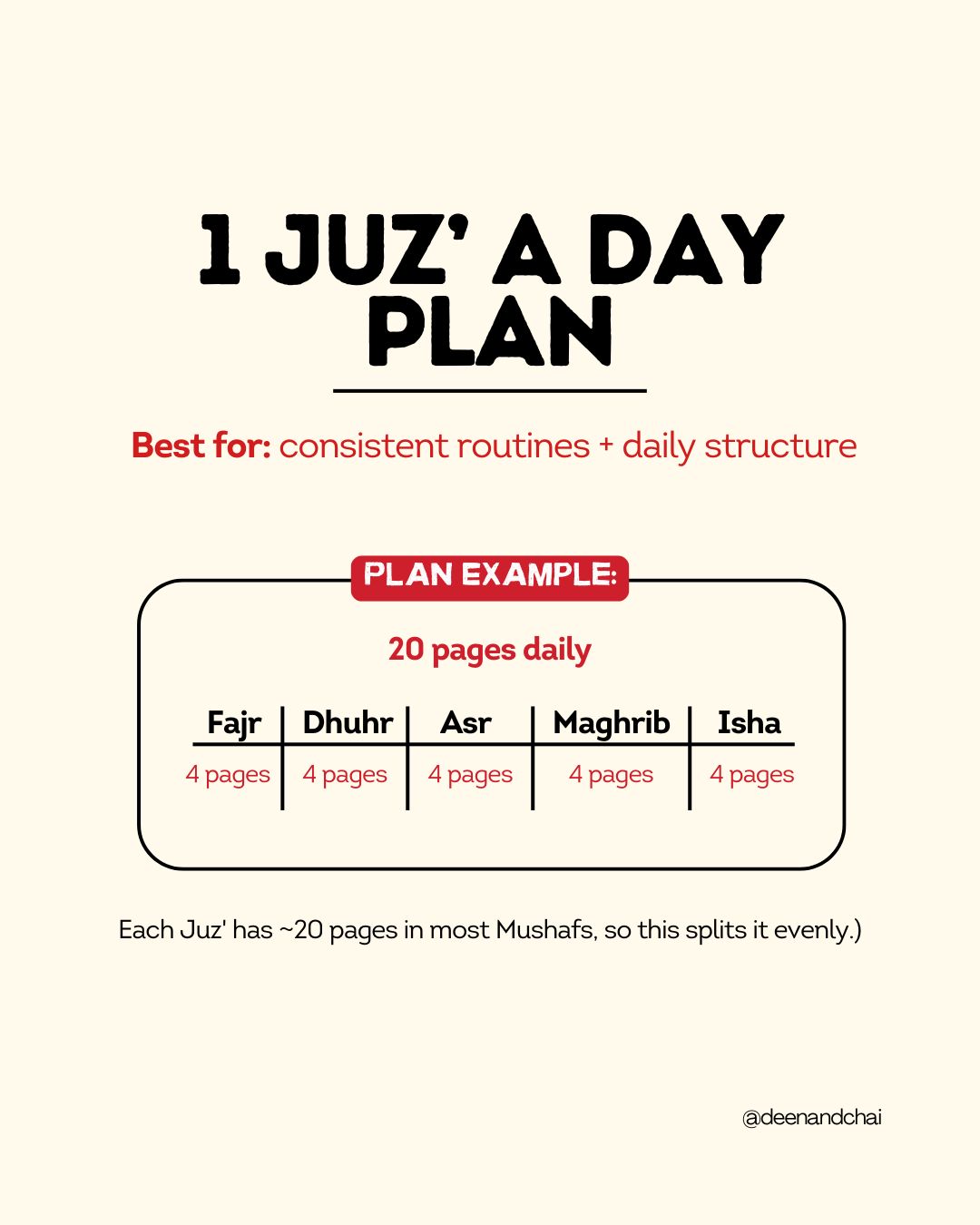
1. The 1 Juz a Day Plan
If you anticipate a steady routine with consistent fasting days, this plan may work well for you.
To complete one juz per day (approximately 20 pages), you can read 4 pages after each salah:
4 pages after Fajr
4 pages after Dhuhr
4 pages after Asr
4 pages after Maghrib
4 pages after Isha
You may also split it - 2 pages before and 2 pages after each prayer - if that feels more manageable.
Small, consistent portions throughout the day make the goal feel lighter
2. The Weekend Power Plan
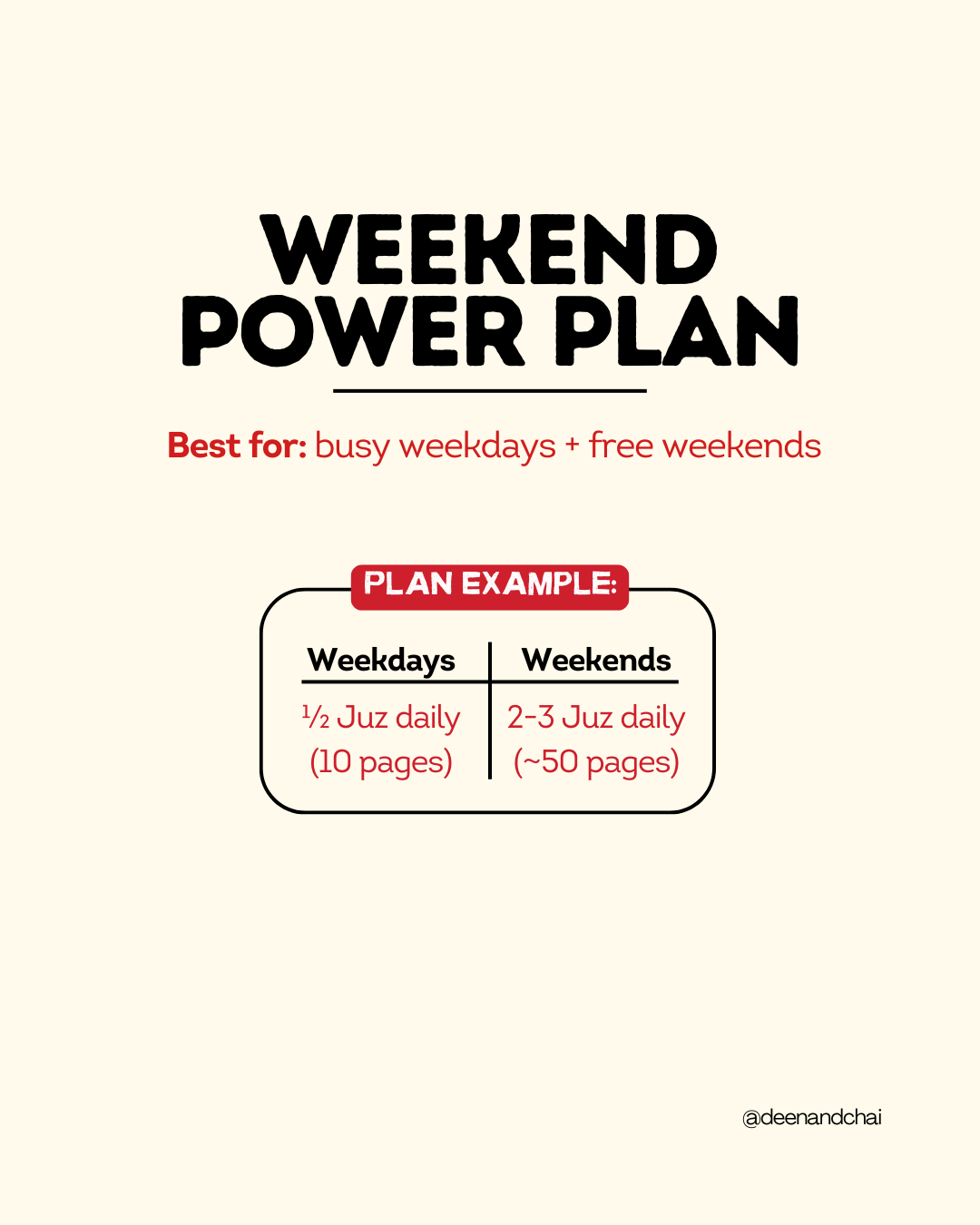
If you work full-time, are a student, or simply have more free time on weekends, this approach allows flexibility.
On weekdays:
Read 2 pages after each salah (or 1 page before and 1 page after).
On weekends:
Increase to 8–10 pages after each salah.
This way, you avoid overwhelming yourself during busy days and maximize the time when you’re more relaxed and focused.
3. The Planned Break Plan
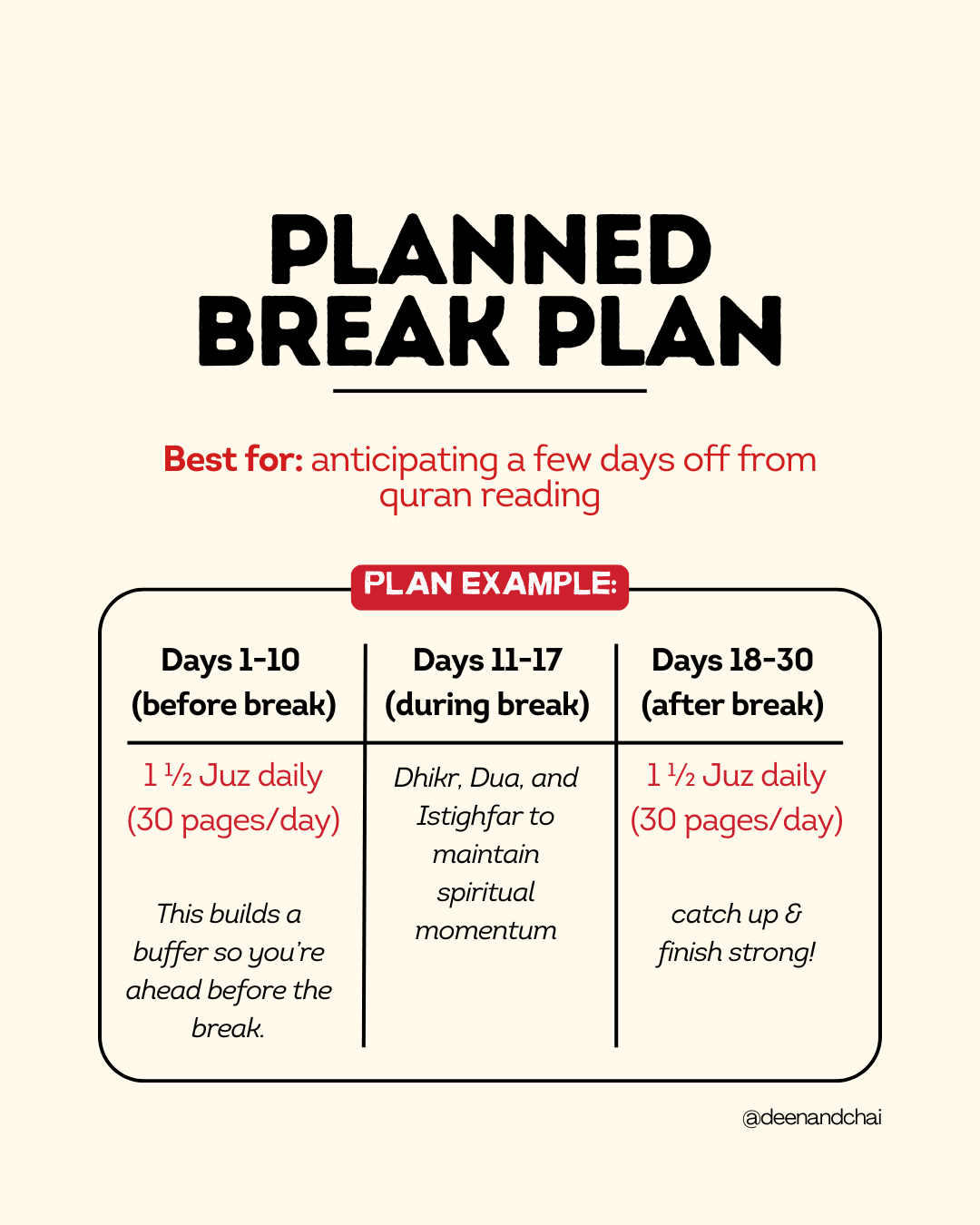
If you know you work best in focused bursts and may need a short reset mid-month, or anticipate a break for menstruation, traveling, or other reason, this plan might suit you.
Days 1–10: 6 pages after each salah (30 pages per day).
Days 11–17: A recitation break.
Days 18–30: Resume 30 pages per day.
During your break, you can still stay spiritually connected through dhikr, du’a, istighfar, listening to Qur’an, or reading translation.
Remember: connection doesn’t only happen through page counts.
4. The Momentum Plan
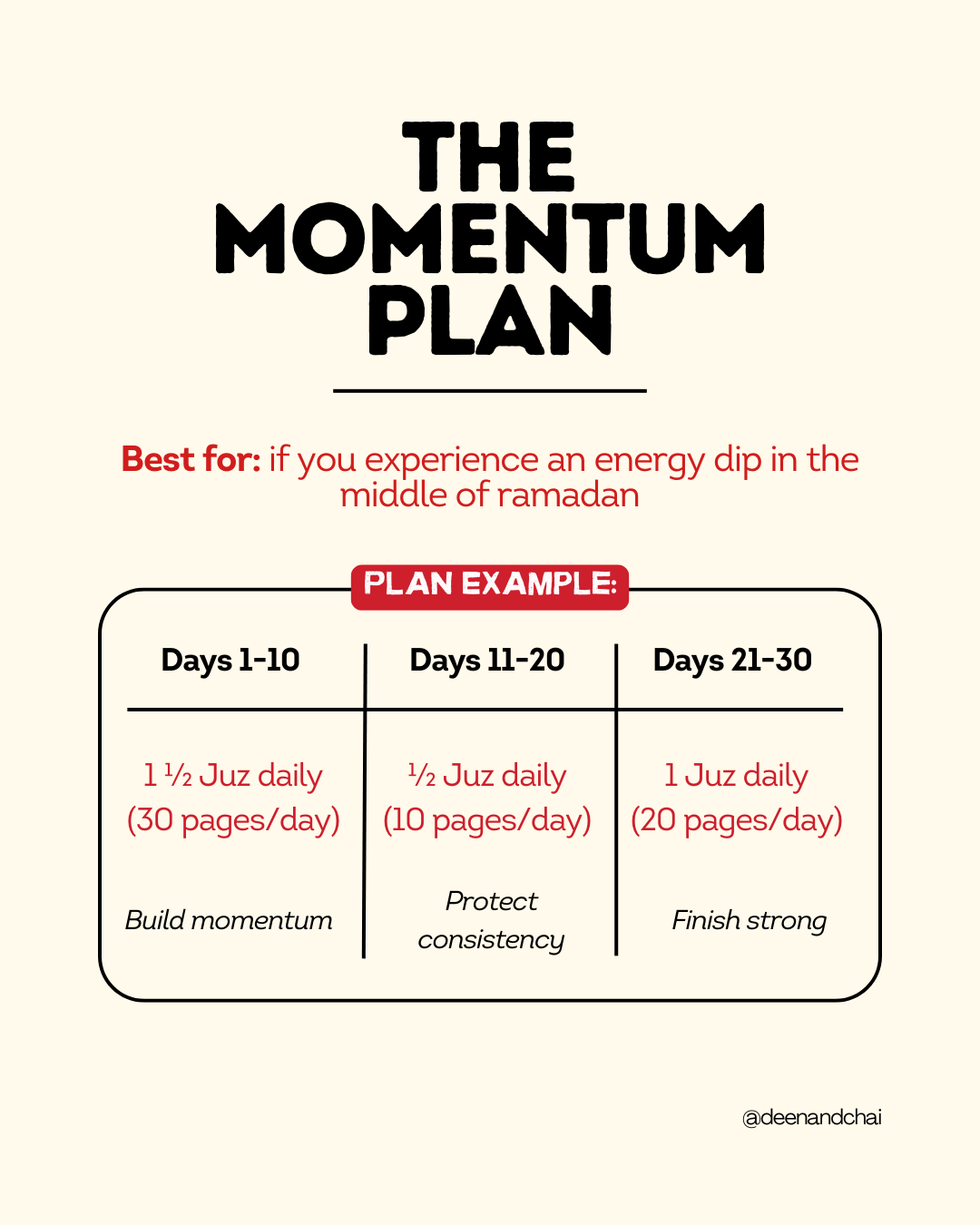
If your energy tends to dip in the middle of Ramadan but you don’t want a complete pause, try this gradual approach:
Days 1–10: 30 pages per day (6 pages after each salah).
Days 11–20: 10 pages per day (2 pages after each salah).
Days 21–30: 20 pages per day (4 pages after each salah).
This method allows you to ease into the month strong, conserve energy when needed, and build momentum again in the final ten nights.
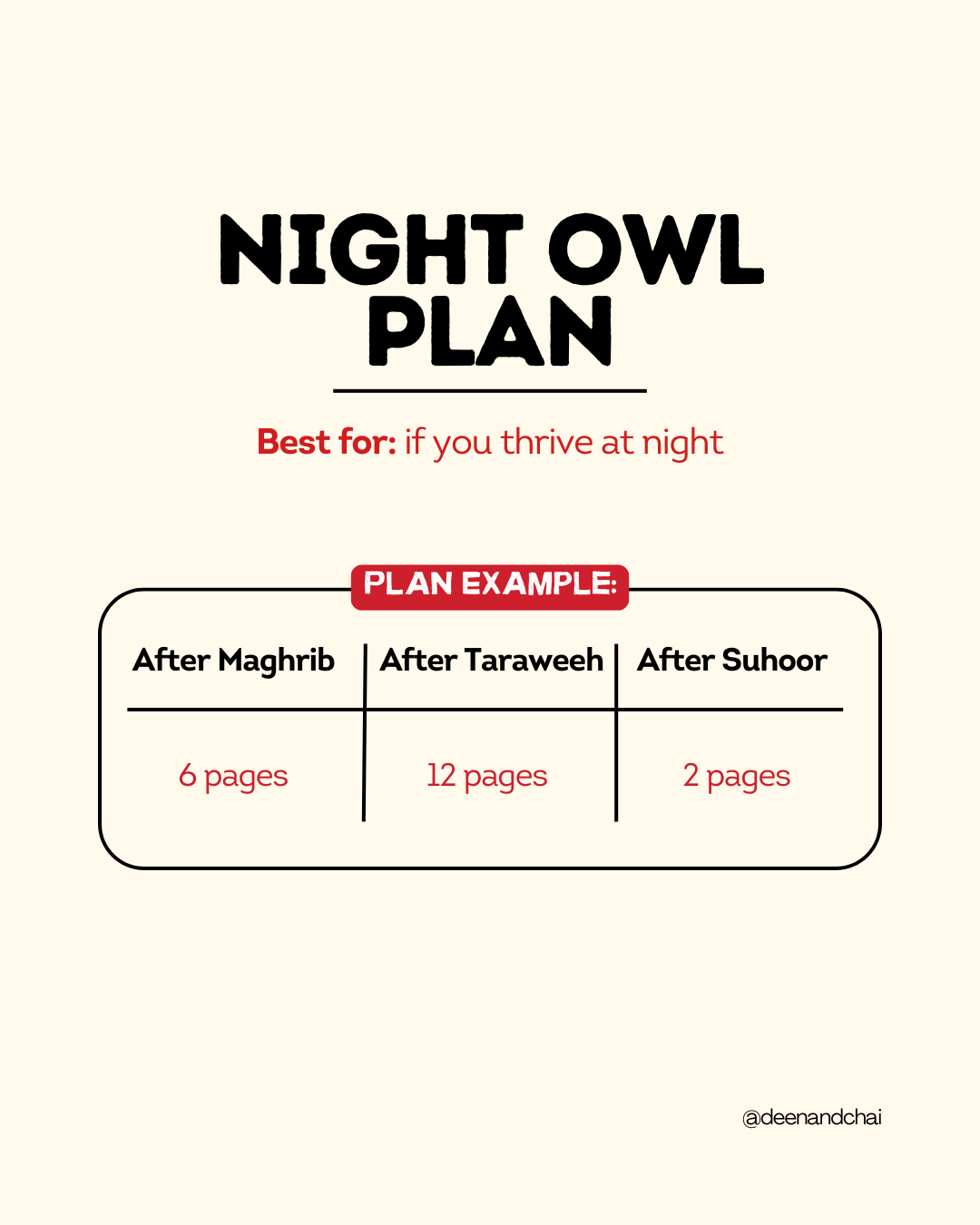
5. The Night Owl Plan
If you feel most spiritually alert at night, embrace that rhythm.
After Maghrib: 4–6 pages
After Taraweeh: 12–14 pages
Before Suhoor: 2–4 pages
For many, the quiet stillness of the night makes reflection deeper and recitation more heartfelt.
——
Most importantly: you do not have to follow any of these plans perfectly.
Ramadan is not a competition of numbers. It is a month of sincerity, intention, and connection.
Choose a structure that feels realistic. Adjust it as you go. Some days will feel powerful, others slower - and that’s totally okay.
May Allah make the Quran the light of our hearts and allow us to experience a Ramadan filled with barakah, reflection, and closeness to Him.